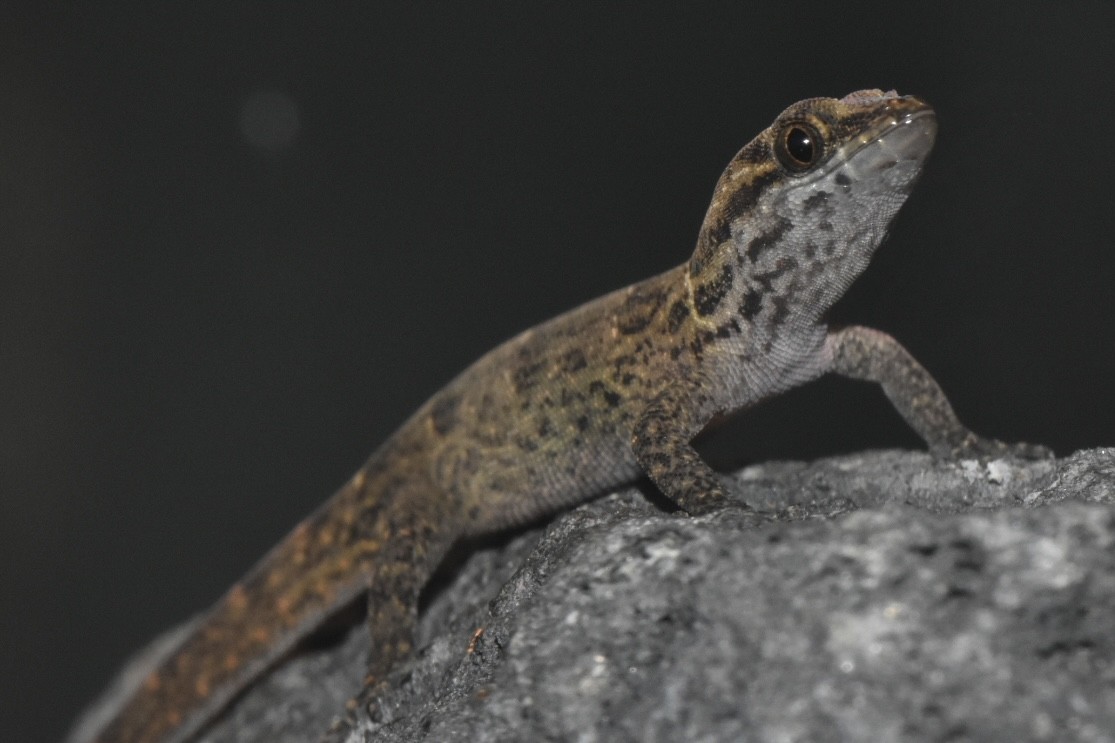
A tiny, jewel-coloured dwarf gecko from the dry islands of the southern Caribbean — at around 7 cm total length, one of the smallest species in its genus. Males are unmistakable: a soft grey body crowned by a vivid yellow head, with the tail darkening toward the tip. Females and juveniles are altogether different, dressed in beige with washed-out brown banding, a slim white collar across the neck, and two black U-shaped marks running through the eyes. Unlike most geckos, G. antillensis has clawed toes without adhesive pads — they cannot climb glass and rely entirely on natural climbing surfaces. Despite their classification as crepuscular, captive animals are often visible throughout the day, sitting calmly on bark and stonework.
Origin
Orchilla, Las Aves, Los Roques as well as Bonaire, Curacao and Aruba.
Temperament
Unusually calm for such a small gecko. Often sits in the open and observes the keeper rather than fleeing when the terrarium is opened. Not a handling species, but a remarkably watchable one.
Size
~ 7 cm
Lifespan
Reaches sexual maturity at around 1 year. Captive longevity typically 5–8 years with proper care.
Did you know
On Bonaire, population densities reach up to 4,200 individuals per hectare — one of the densest lizard populations ever recorded. Living shoulder-to-shoulder in the same rock piles and leaf litter, these tiny geckos are quietly one of the most abundant vertebrates on their home islands.
×Currently not available for purchase
Keeping Guide
Housing
A 30 cm cube terrarium is sufficient for a single animal or a 1.1 pair. Group housing is not possible — keep individually or as a true pair only. Dry-type setup: deep sand substrate, rocky backwall (achievable with tile-adhesive texturing), piled and secured slate or stone hides, and pieces of bark against the walls. Drought-loving plants such as small Euphorbia, cacti, or Tillandsia complete the microhabitat. A small water dish and a dish of crushed cuttlebone or eggshell should always be present.
Temperature & Humidity
Daytime ambient 26–30 °C with a warm spot reaching 32–34 °C, provided by a low-wattage halogen puck or heat mat on a side/rear wall. Night drop to 22–25 °C. Humidity is kept low — 40–50 % — with a light misting every 2–3 days. In winter, reduce temperatures by ~5 °C and photoperiod from 12 to 9 hours daily, with slightly more frequent misting to simulate the Caribbean rainy season. This seasonal rest is important for successful breeding.
Feeding
Adults fed twice weekly with a varied diet of small live insects sized appropriately for the gecko — small crickets, bean weevils, fruit flies, pea aphids, woodlice and firebrats. Dust feeders with calcium + D3 every second feeding; multivitamin once weekly. In the wild this species feeds largely on insect larvae. Juveniles eat the same range, smaller in size, dusted at every feeding.
Handling
Not a handling species. Although unusually calm and tolerant of an open terrarium, they are tiny, fast, and can drop their tail under pressure. Move only when necessary using a soft transport container, never by hand.
Experience Level
Beginner-friendly. The husbandry is genuinely simple — a dry setup, basic lighting, a warm spot, and twice-weekly feeding is all they ask for. Hardy, calm, and undemanding once their terrarium is in order. The only things to think about are using live insect feeders (no pellets) and keeping them solo or as a true pair rather than in groups. A great first gecko for anyone ready to step beyond the most common species.
We use cookies to keep you logged in and remember your cart. No tracking, no advertising.